Negaristan Farhanghi Afghan Afghan Cultural & Literary Council
This page is dedicated to the official emblem of Negaristan-e Farhanghi Afghan — a community of writers and poets preserving Afghan literature, publishing and celebrating Dari and Pashto poetry and prose for the diaspora and generations to come.
Negaristan-e Farhanghi Afghan (نگارستان فرهنگی), known in English as the Afghan Cultural and Literary Council, brings together writers and poets who have published many books of Dari and Pashto poetry and literature. The council emblem displayed here represents our shared commitment to Afghan literary heritage.
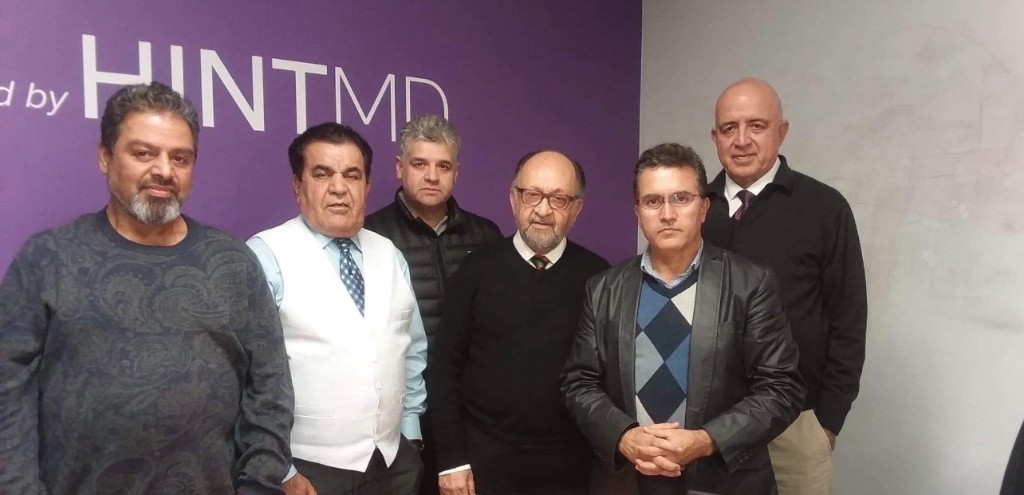
Negaristan-e Farhanghi Afghan was founded in 2014 by Mr. Iqbal Rahbar Tokhi, AbdulRashid Binish, Najia Karim Qayoumi, Fareed Shirzai Wardak, Samad Nesari, and Fahim Soha. The organization began under the leadership of Iqbal Rahbar Tokhi, a well-known poet and writer who has published many books.
Founding Members of Negaristan-e Farhanghi Afghan2014
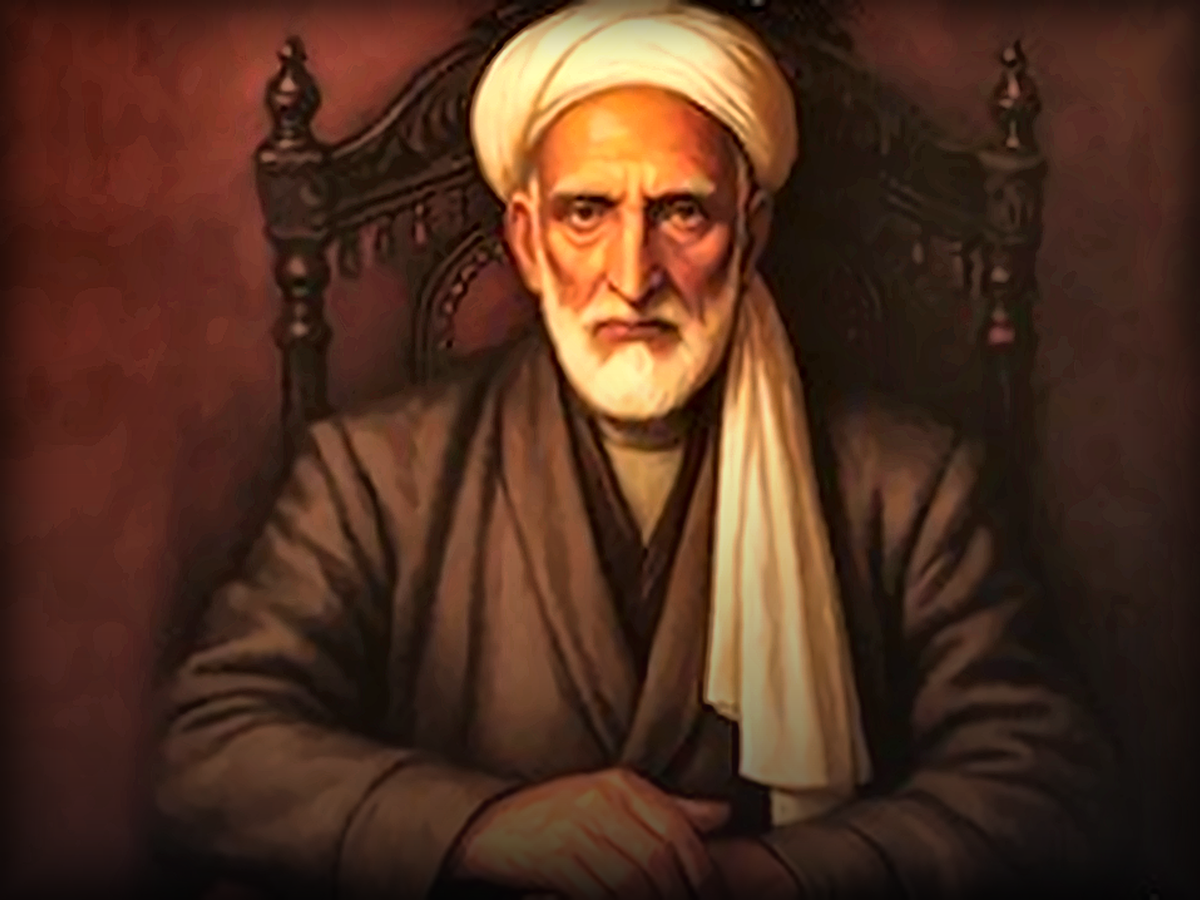
Over the years, dedicated intellectuals have joined in many events, including Najia Rasa Hajizada, Ustad Mohammad Yusuf Kohzad, Mr. Dauod Mohmand, and Abdul Wakil Mateen, a recognized poet of Pashto literature.
Negaristan-e Farhanghi Afghan has held successful remembrance events honoring Ghulam Nabi Ashqari (Sufi Ashqari) and Hamid Mohmand (Hamid Mashokhil) — both celebrated poets of Afghanistan. Mr. Wakil Mateen presented an extensive reseach on Hamid Mohmand Mashokhil and his literary service.
Negaristan-e Farhanghi Afghan held a seminar and celebration of the life of Mawlana Jalaluddin Mohammad Balkhi in April 2017. The event was inclusive of a research presentation and a visual report of a trip to Mawlana Balkhi's tomb in Konya, Turkey by Fareed Shirzai Wardak, along with articles and poetry recitation by many other personalities.
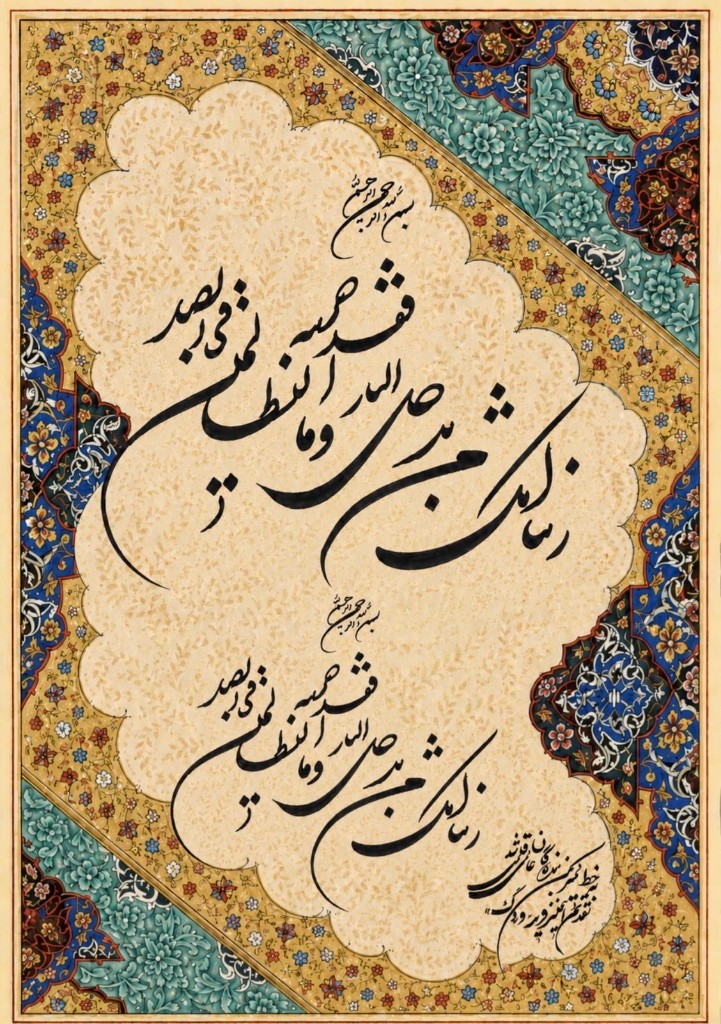
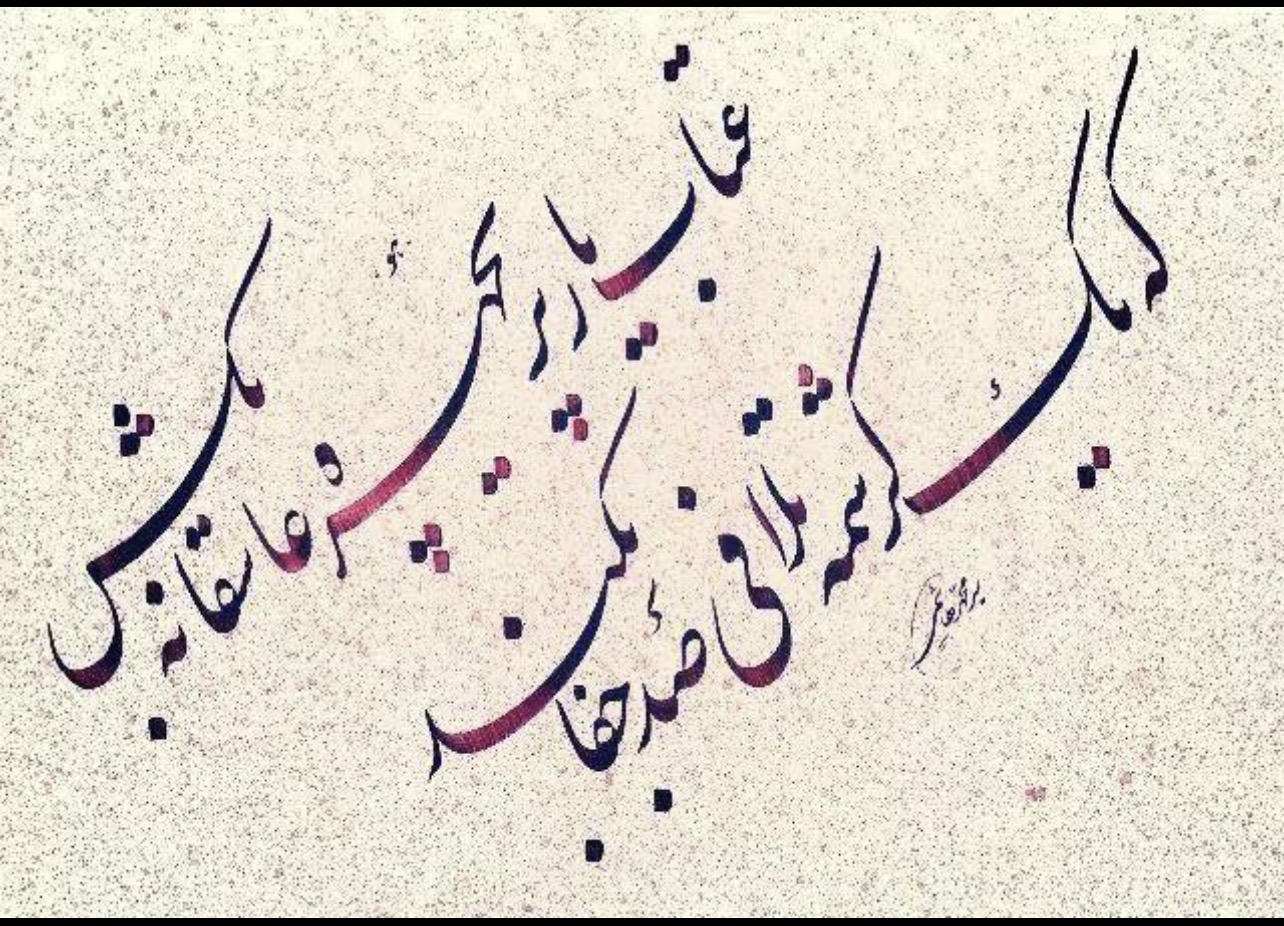
در این خاک، در این خاک، در این مزرعه پاک
به جز مهر، به جز عشق، دگر تخم نکاریم
شما مست نگشتید و زان باده نخوردید
چه دانید چه دانید که ما در چه شکاریم
English translation
In this earth, in this earth, in this pure field,
We sow no seed but kindness and love.
You have not grown drunk; you have not tasted that wine—
What do you know, what do you know of the hunt we are in?
— Mawlana Jalaluddin Mohammad Balkhi
In 2018, the organization held elections and elected Fareed Shirzai Wardak as President. He has led Negaristan-e Farhanghi Afghan tirelessly since then, guiding its literary programs and community outreach.
As a chapter of the Afghan Diaspora Center, Negaristan Farhanghi Afghan connects poets, writers, and literary audiences within ADC's national network while preserving Afghan heritage through the written word.
Dari Literature
Pashto Poetry
Published Authors
Cultural Heritage
Literary Community
Diaspora Connection
Organization Information
Name (Dari)Negaristan Farhanghi Afghan (نگارستان فرهنگی)
English NameAfghan Cultural and Literary Council
Founders (2014)Iqbal Rahbar Tokhi, AbdulRashid Binish, Najia Karim Qayoumi, Fareed Shirzai Wardak, Samad Nesari, Fahim Soha
Founding LeaderMr. Iqbal Rahbar Tokhi
President (since 2018)Fareed Shirzai Wardak
Board of DirectorsFareed Shirzai Wardak, Iqbal Rahbar Tokhi, Najia Karim, Najia Rasa Hajizadah
گوش کن ای جان من تا این سخن یادت نره
قصه تاریخ این خاک کهن یادت نره
داستان راد مردان وطن یادت نره
در کنار بسترت گپ های من یادت نره
گرچه انسانی ولی آدم شدن یادت نره
Listen, O my soul — do not let these words slip from your mind;
The story of the history of this ancient land — do not forget;
The tale of the brave men of the homeland — do not forget;
By your bedside, my words — do not forget;
Though you are human, do not forget what it means to become truly humane.
— استاد محمد یوسف کهزادUstad Mohammad Yusuf Kohzad | Negaristan-e Farhanghi Afghan
Literary Heritage
Poets & Literary Figures of Afghanistan
Disclosure: The poets featured here are honored for their contributions to Dari and Pashto literature—not for their political views or actions. We are committed to our non-alignment pledge with any political party. Our aim is solely to promote our shared linguistic heritage and celebrate Afghanistan’s rich poetic culture.
Negaristan-e Farhanghi Afghan honors the writers and poets who shaped Afghan literature in Dari and Pashto — from classical masters to beloved voices of the twentieth century. Each card offers a brief portrait and a sample of their verse or writing.
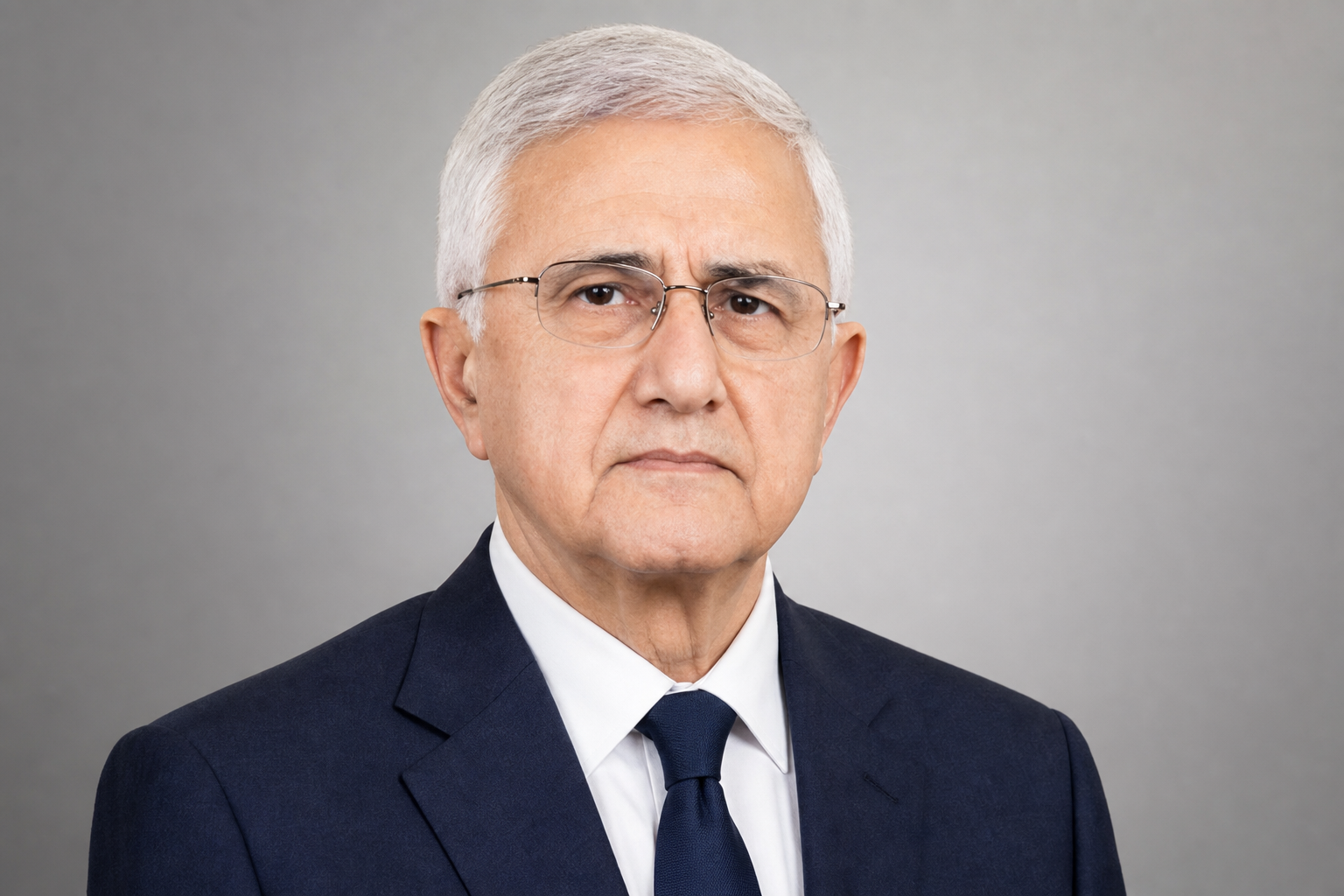
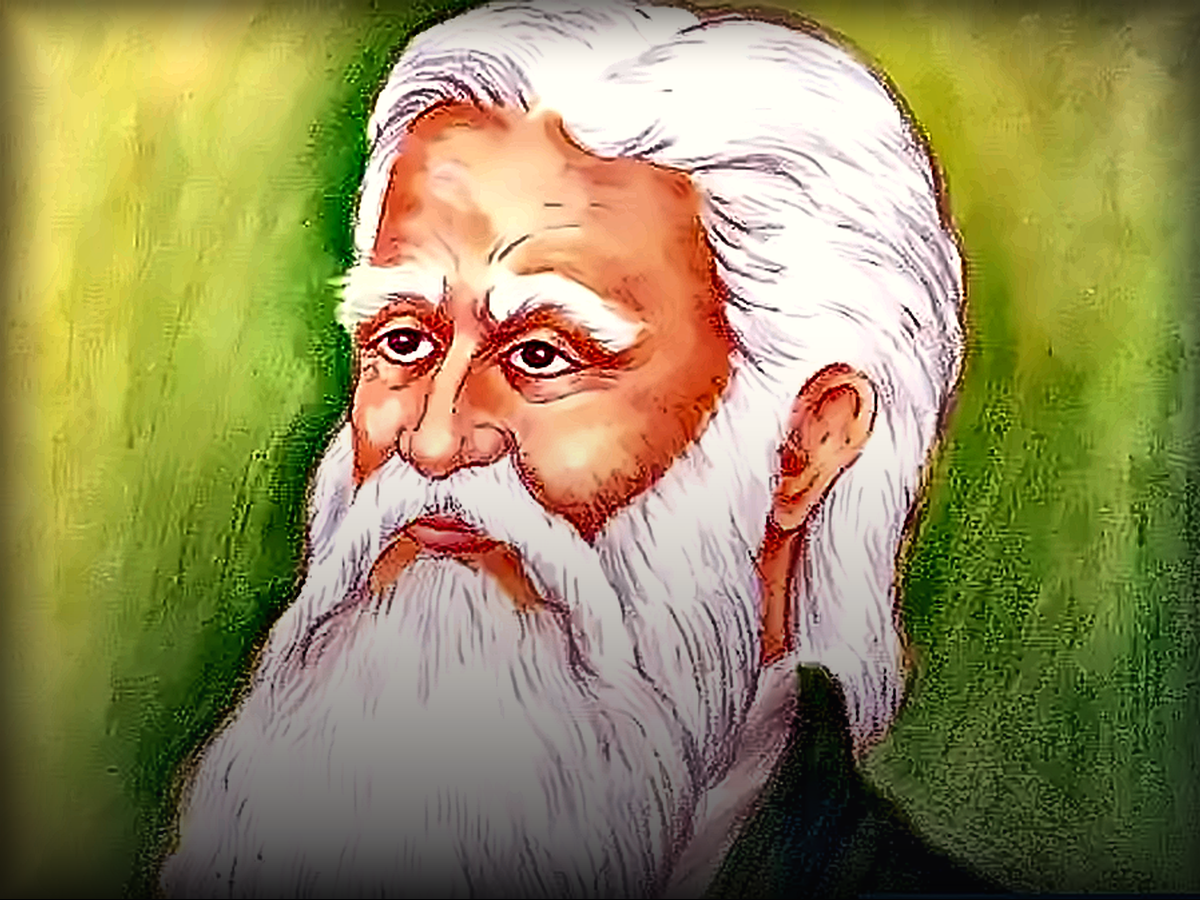
Well-known poet and author of many published books in Dari. He founded Negaristan-e Farhanghi Afghan and led the organization as its first chairman, nurturing a community of Afghan writers in the diaspora.
Sample verse
سرم چون شاخه از باد خزانی خم نمیگردد
ز عشقم ای وطن با تو، به مردن کم نمیگردد
اگر سوزم به راهت یا به جوی خون درغلطم
ز دودم آه نمی خیزد به چشمم نم نمیگردد
My head, like a branch, does not bend to the autumn wind; for love of you, O homeland, my love does not wane—even unto death. If I burn upon your path or roll in streams of blood, from my smoke no sigh arises; from my eyes no tear forms.
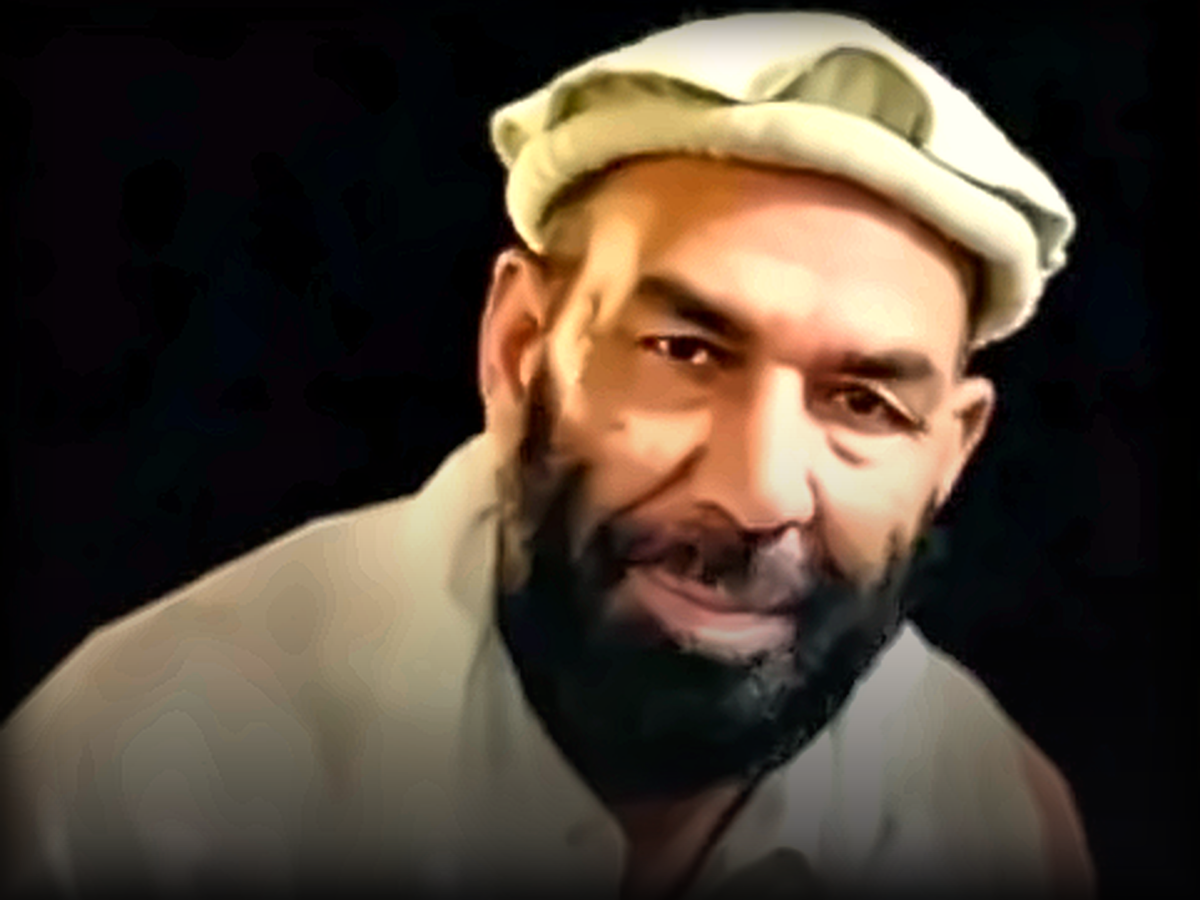
Recognized Pashto poet who has taken part in Negaristan-e Farhanghi Afghan’s literary programs and presented extensive research on Hamid Mohmand (Mashokhil), contributing both poetry and scholarship to Afghan letters in the diaspora.
Sample verse
چې د پت له خاورې جوړ دی ننګرهار زما وطن دی
چې ډګر د سربازی دی قندهار زما وطن دی
د واخان له جګو څوکو تر هراته ورنه ځار شم
د احمد د تورې کرښه تر مزار زما وطن دی
Where it lies at the foot of the hills, Nangarhar is my homeland; where the plain is of cypresses, Kandahar is my homeland. From Wakhan’s lofty peaks to Herat I shall not grow weary—from Ahmad’s sword-line to Mazar, that whole land is my homeland.
Founding Member
DariContemporary
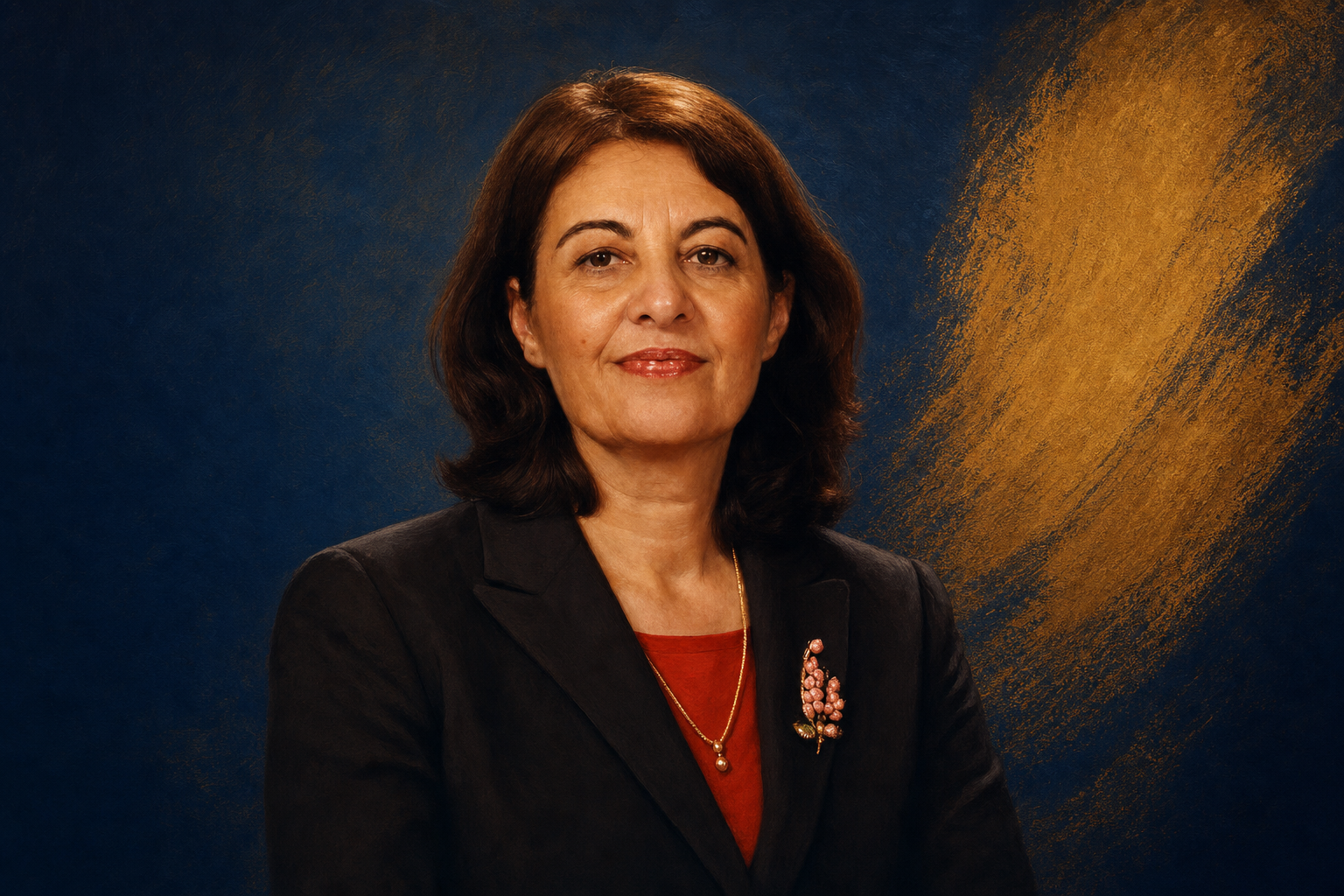
Najia Karim
Founder, Negaristan-e Farhanghi Afghan (2014)
Founding member of Negaristan-e Farhanghi Afghan alongside Iqbal Rahbar Tokhi, AbdulRashid Binish, Fareed Shirzai Wardak, Samad Nesari, and Fahim Soha. She has remained active in the organization’s literary programs and cultural events in the Afghan diaspora.
Sample verse
مشک عبیر بیز و بوستانسرای کابل
عطر سمن دل آویز شب در فضای کابل
زیبا رخان کویش پوشیده از حیا روی
کبک دری خرامان در کوه های کابل
Musk, ambergris, jasmine, and the garden-palace of Kabul; jasmine scent clings to the heart—night in the skies of Kabul. Lovely faces with cheeks veiled by modesty; pheasants pacing on the mountains of Kabul.
Pashto Poet
PashtoContemporary
Abdul Bari Jahani
1943– • Kandahar, Afghanistan
Distinguished Pashto poet, writer, and cultural figure from Kandahar. He authored the lyrics of Afghanistan’s national anthem, served as Minister of Information and Culture, and has published poetry and prose that celebrate Afghan identity, homeland, and the Pashto literary tradition.
Sample verse
دا وطن افغانستان دی
دا عزت د هر افغان دی
کور د سولې، کور د تورې
هر بچی یې قهرمان دی
This homeland is Afghanistan; this honor belongs to every Afghan. A home of peace, a home of the sword—every child of hers is a hero.
People's Poet
PashtoContemporary
Matiullah Turab
1971–2025 • Khogyani, Nangarhar • Turab Saib
Blacksmith, metalworker, and one of the most beloved Pashto poets of his generation. Known as Turab Saib, he composed verse from memory about war, corruption, and the suffering of ordinary Afghans — recited at gatherings and shared widely across Afghanistan and the diaspora. His collections include Ghubar Par Hindaro and Speen Baghawat.
Sample verse
جنګ رټل دي، جنګ وژل دي
جنګ د وینو تویول دي
جنګ سوداګري ده، وینه پکې پانګه ده
مونږه وایو افغانان یو مګر هر ساز ته ګډیږو
War is bought and sold, war is killing, war is the spilling of blood. War is a trade; blood is its currency. We say we are one people—Afghans—yet we fall in with every tune that is played.
Poet & Writer
Dari20th–21st Century
Wasef Bakhtari
1943–2024 • Afghanistan
Renowned Dari poet and writer whose verse and literary criticism shaped modern Afghan letters. A leading voice of his generation, he published poetry and prose that explored homeland, memory, and the living traditions of Persian literature in Afghanistan.
Sample verse
یک چند در این بادیه بودیم و گذشتیم
با داس هوس خار درودیم و گذشتیم
تا چشم اجل را دو سه دم خواب رباید
افسانهی بیهوده سرودیم و گذشتیم
A while in this wilderness we lingered, then passed on; with the sickle of desire we sowed thorns, then passed on. Until the eye of death stole a breath or two of sleep, we sang a hollow tale, then passed on.
Poet & Artist
Dari20th Century
Ustad Mohammad Yousuf Kohzad
1935–2019 • Kabul, Afghanistan
Painter, poet, playwright, actor, and pioneer of modern Afghan art. He founded the Ghulam Mohammad Maimanagi Art Gallery in Kabul, wrote dramas for Afghan theater, and published poetry shaped by the Hindī (Indian) school and the influence of Bedil — a multi-dimensional cultural figure of twentieth-century Afghanistan.
Sample verse
نمیدانم چه میریزد فلک در ساغر فردا
شرابې یا که در خون میکشاند پیکر فردا
به این دریای توفان خیز بی پایان که میبینم
خبر از خود ندارد کشتی بی لنګر فردا
I know not what the heavens will pour into the cup tomorrow—wine, or whether they will draw the body in blood tomorrow. In this boundless, storm-tossed sea that I behold, Without an anchor it has no tidings of itself, the ship of tomorrow.
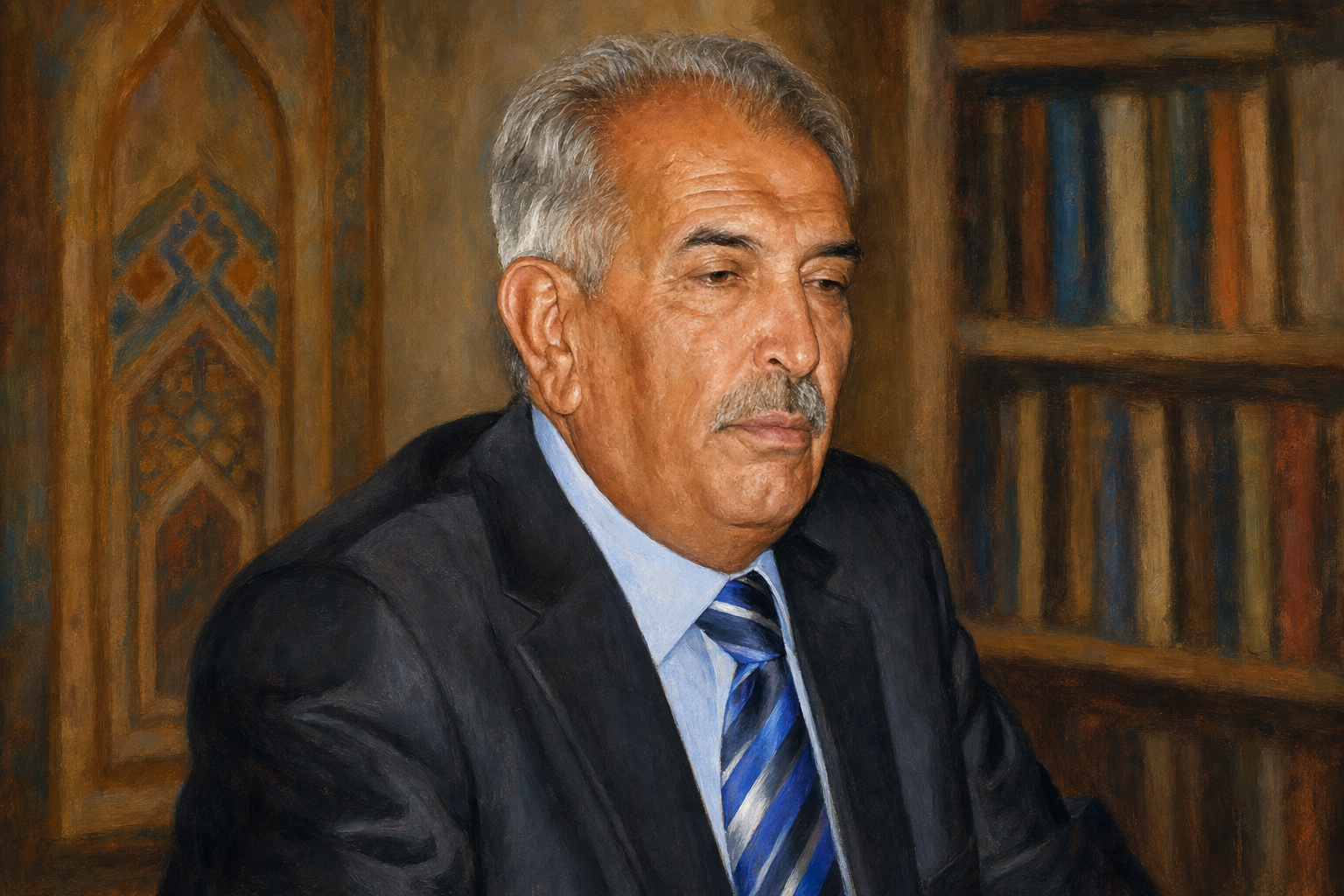
One of the most celebrated poets of modern Afghanistan in both Pashto and Dari. Born Ghulam Mujaddid, he published more than a dozen anthologies — including the landmark Chunghar (1962) — and many of his verses were set to music by singers such as Nashenas and Qamar Gula. A prolific writer and intellectual, he shaped Afghan literary life across eight decades.
Sample verse
ژوندون څه دی د زمان په زړه کې منډه
ډېره ګونګه، ډېره تېزه، ډېره لنډه
څو لمن درټولوې نوبت دې تېر وي
لکه څوک چې په چا ووهي ملنډه
What is life—a run in the heart of time? Very mute, very swift, very short. When you shake out your hem, your turn has passed, like one who slips on another’s cloak.
Classical Master
Dari / Persian20th Century
Ustad Khalilullah Khalili
1907–1987 • Kabul, Afghanistan
Historian, diplomat, university professor, and the last of Afghanistan’s great classical Persian poets. He helped introduce modern Persian poetry to Afghanistan, authored the celebrated work Hero of Khorasan, and left a vast divan of ghazals, quatrains, and masnavis read across the Persian-speaking world.
Sample verse
نوای نای من، فریاد یک جهان دل است
حدیث جان من، افسانهٔ هزار امل است
به یاد وطن، خون میچکد ز دیدهٔ من
دل غریب من، آوارهٔ کدام گسیل است
The sound of my reed-flute is the cry of a world of hearts; the story of my soul is the legend of a thousand hopes. For memory of homeland, blood drips from my eyes—my estranged heart, wanderer of which exile is it?
Dari Poet
Dari20th–21st Century
Humaira Nekhat Dastagirzada
1960–2020 • Kabul, Afghanistan
Prominent Afghan poet and scholar of Dari literature, known for verse that gave voice to exile, homeland, and the suffering of ordinary Afghans. Her collections include Be Door-e Atash o Dareegh (به دور آتش و دریغ). She lived and worked abroad, including in Bulgaria and Tajikistan, and passed away in the Netherlands in September 2020.
Sample verse
آنجا که شعر، همنفسِ بغضِ خانههاست
فریادِ ما حکایتِ تلخِ فسانههاست
ما را به جرمِ عشقِ وطن سنگ میزنند
اینجا که مرگ، سایهیِ دیوار و بستر است
Where poetry breathes with the sorrow of homes, our cry is the bitter tale of legends. They stone us for the crime of loving our homeland—here where death is the shadow of wall and bed.
Pashto Poet
Pashto20th Century
Gul Pacha Ulfat
1909–1977 • Laghman, Afghanistan
Poet, scholar, and president of the Pashto Tolana (Pashto Academy). He published extensively in Pashto and Dari, served in public life, and received the Khushhal Khan and Abu Ali Sina literary medals.
Sample verse
له سپیرو خاورو به پورته بیا ګلان شی
معطر به په وږمو بیا دغه جهان شی
په هوا کې به ښکاره نوی مرغان شی
تحول په زمانه کې څرګندیږی
From bright horizons, flowers will rise again; fragrant along the pathways, this world will bloom again. New birds will appear in the air; transformation through time will be revealed.
Beloved Sufi lyric poet of twentieth-century Afghanistan, known for simple, musical ghazals in Dari that drew on the meters and spirit of Rumi and Bidel. Negaristan-e Farhanghi Afghan holds remembrance gatherings in his honor.
Sample verse
عشقِ تو در سینهٔ من همچو جان پنهان بود
رازِ من را پیشِ هر بیگانه و رسوا مکن
گر چه میدانم که آخر میکشد عشقات مرا
رحم کن بر حالِ من، امروز را فردا مکن
Your love lay hidden in my breast like the soul; do not lay my secret bare before every stranger and shame me. Though I know your love will slay me in the end, have mercy on my plight—do not make today tomorrow.
Literary Voice
Pashto20th Century
Hamid Mohmand
Hamid Mashokhil
Celebrated Pashto poet of Afghanistan, honored by Negaristan-e Farhanghi Afghan at remembrance events. Board member Wakil Mateen has presented extensive research on Mashokhil’s literary service and contribution to Pashto letters.
Sample verse
خط پر مخ د صنم راغی، که سپوږمۍ شوه په هاله کې
دا یې غاښ په خوله کې زیب کا، که ژاله شوه په لاله کې
دا زما له غمه شین زړه پکې خیال د یار د شونډو
هسې رنګ زیب او زینت کا، لکه می په شنه پیاله کې
A line came upon the beloved’s face, as if the moon had risen in its halo; it beautifies like a tooth in the mouth, as if dew had fallen in a tulip. In my sorrow-blue heart, the thought of my beloved’s lips so adorns and colors—like wine in a green cup.
Classical Pashto
Pashto17th Century
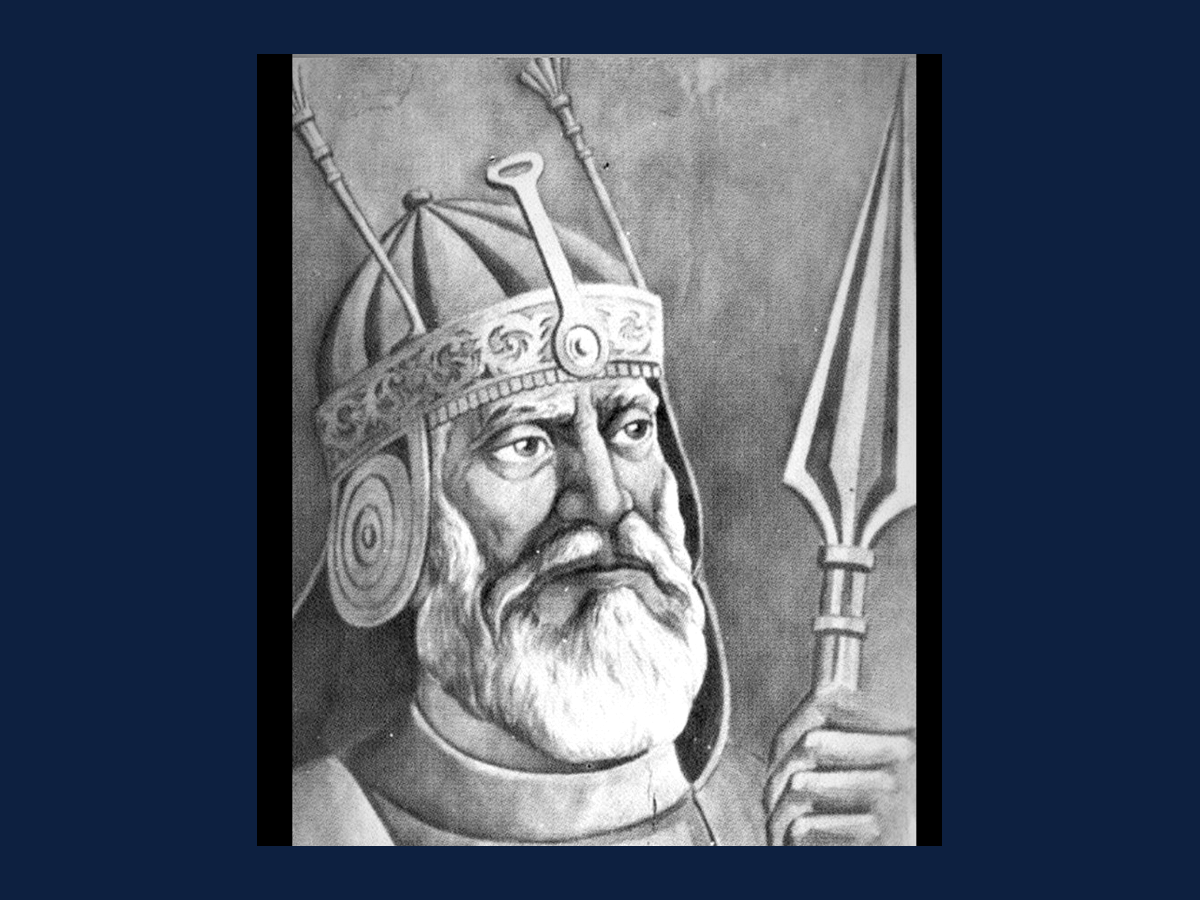
Khushhal Khan Khattak
1613–1689 • Kabul region
Warrior-poet of the Khattak tribe and father of modern Pashto poetry. His ghazals and rubaiyat express love of homeland, honor, and the Pashtun way of life — a cornerstone of Afghan literary identity.
Sample verse
د افغان په ننګ مې وتړله توره
ننګیالی د زمانې خوشحال خټک یم
که تا کم نظر په ما باندې وکړ
زه په خپل نظر کښې لوړ تر فلک یم
For Afghan honor my sword was drawn; pride of the age, I am Khushhal Khattak. If you look upon me with little regard, in my own judgment I stand higher than the heavens.
Classical Master
Dari / Persian17th–18th CenturySabk-e Hindi
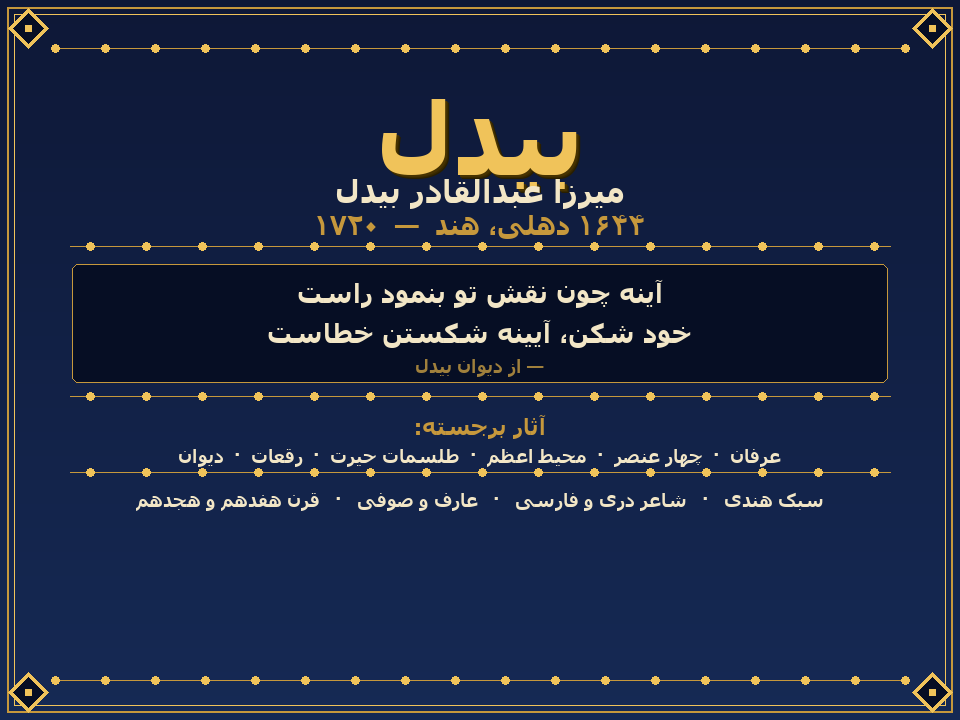
Mirza Abdul Qadir Bedil
1644–1720 • Azimabad (Patna), India — Delhi, India
Master of Sabk-e Hindi and one of the supreme poets of the Dari/Persian language. Born in India to a family of Central Asian origin, Bedil is cherished above all in Afghanistan and Tajikistan, where annual Bedil symposiums honour his verse to this day. His poetry turns on the themes of hayrat (bewilderment), the mirror as a symbol of the self, divine unity, and the transience of existence. Major works: Irfan, Chahār Unṣur, Muhit-e Azam, Ṭilasmāt-e Hayrat, Ruqaʿāt, and his celebrated Divan.
From the Divan — three couplets
به پستی تا بماند شوق جهدی کن که خون گردی
چو آب آیینهدار رنگ گردد، پر برون آرد
فریب جاه از بازیچهٔ گردون مخور بیدل
که میترسم سر بیمغزی از افسر برون آرد
Strive so that longing endures in humility — until you become blood. As water turns mirror-like in colour, it draws the feather out. Be not deceived by rank and fortune's game, O Bedil — I fear a hollow head will lose its crown.
Abdur Rahman Mohmand, known as Rahman Baba, is the most beloved classical Pashto Sufi poet — often called the “Nightingale of Peshawar.” His Diwan of ghazals on divine love, humility, and moral life is recited and memorized across Afghanistan, Pushtonistan, and the diaspora.
Sample verse
که مې سل ځله توبه وي په مینه
بیا به نه کړم توبه نغده په مینه
که هما د سعادت مې په سر کښېني
زه هما غواړم د خپل صنم په مینه
Though I repent a hundred times for love, again I will not break my repentance in love. If such fortune should crown my head, still I desire my own beloved in love.
Classical Master
Dari / Persian13th Century
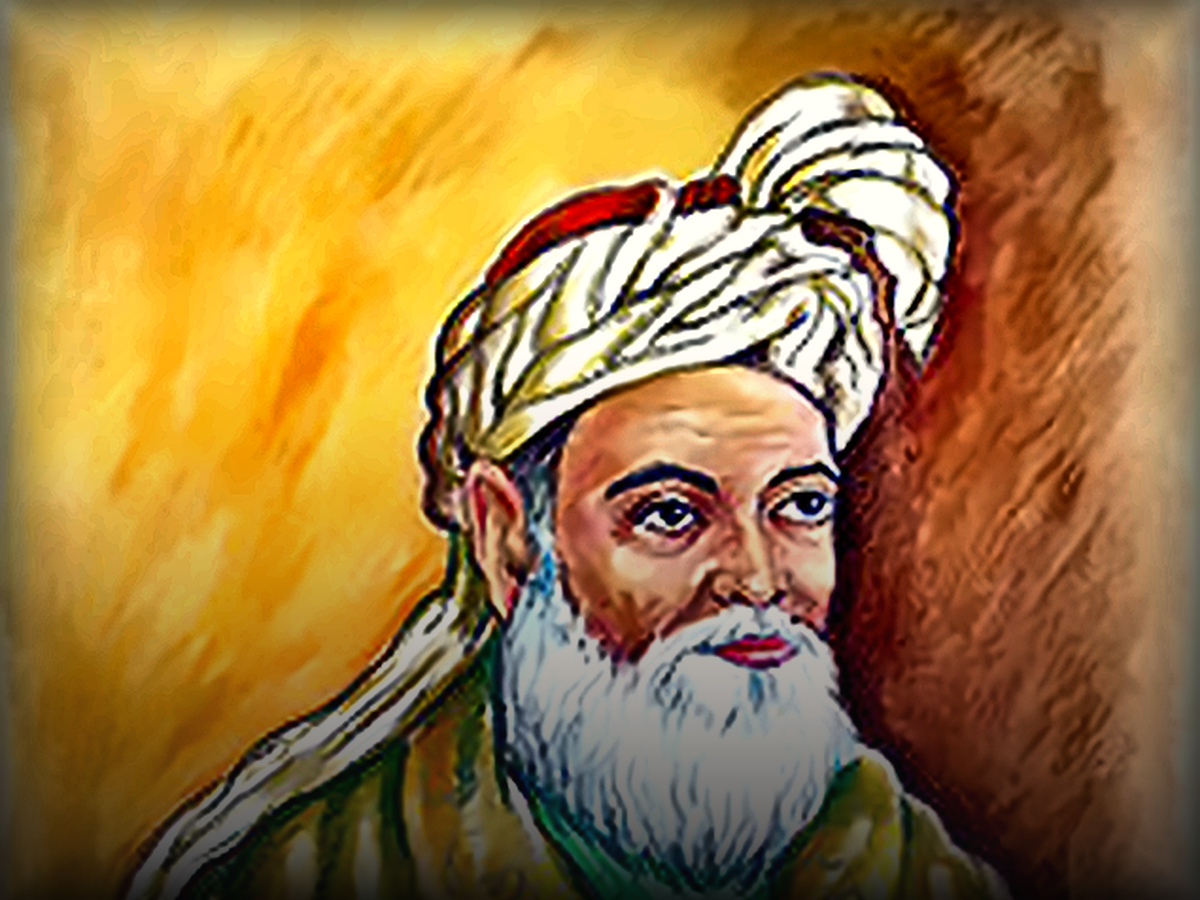
Mawlana Jalaluddin Mohammad Balkhi
1207–1273 • Born in Balkh, Afghanistan
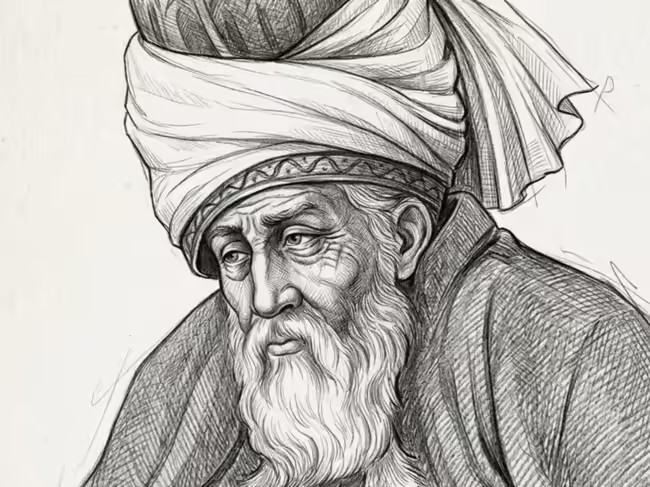
Known worldwide as Rumi, he is among the greatest mystical poets in Persian literature. Negaristan-e Farhanghi Afghan marked his life with a seminar and celebration in April 2017, including a visual report from his tomb in Konya, Turkey.
Sample verse
ای آن که بجان این جهانی زنده
شرمت بادا چرا چنانی زنده
بی عشق مباش تا نباشی مرده
در عشق بمیر تا بمانی زنده!
O you who live by the soul of this world—shame on you! Why do you live thus? Be not without love, lest you be dead; die in love, that you may remain alive!
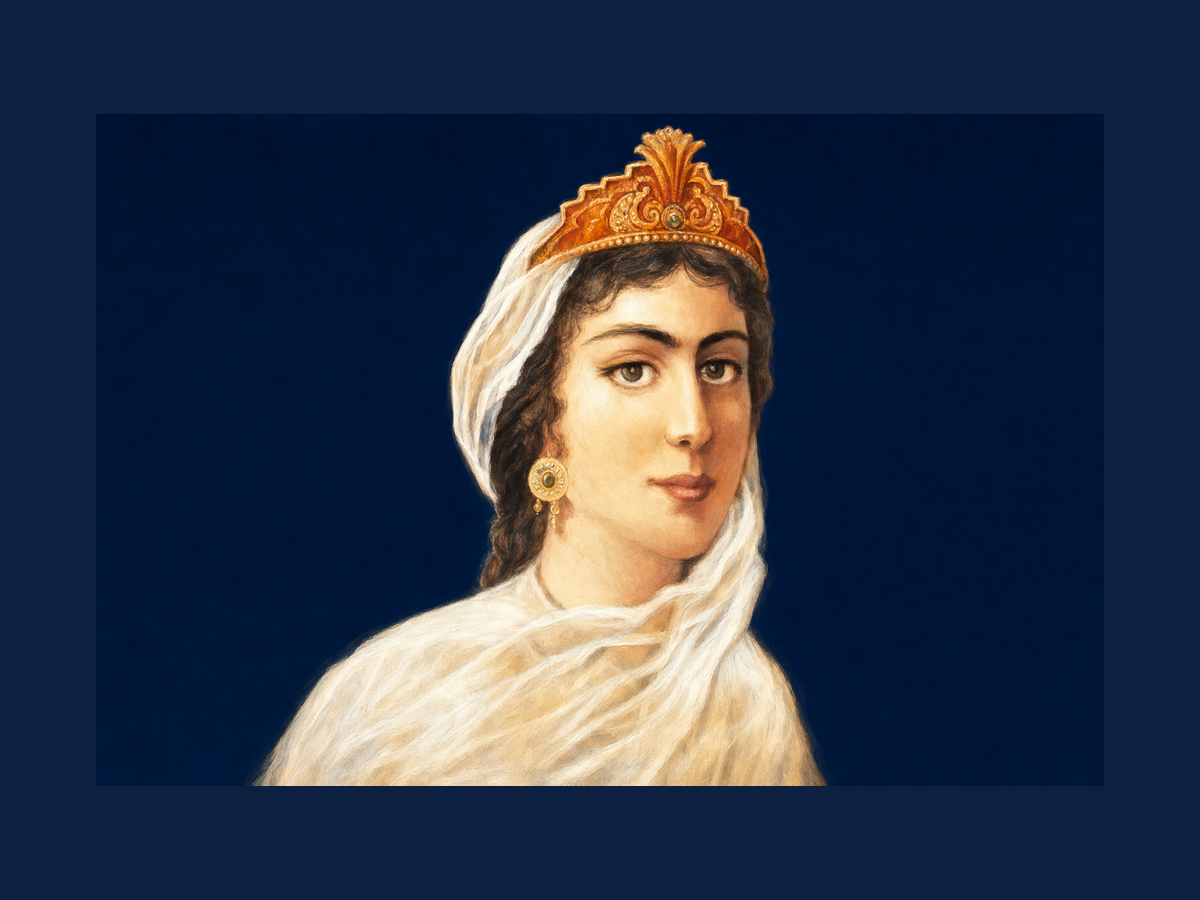
Among the first known woman poets in Persian literature and a daughter of Balkh. Legend tells that she wrote her last verses in her own blood on the wall of her chamber—lines of longing and defiance that have made her an enduring symbol of love, sorrow, and the literary genius of Afghan women.
Sample verse
من چو بیدارم شب آرام ندارم
تا صبح بیدارم و دور از یارم
چشم تر دارم و دیده بر بارم
چون گل بی نیازم و بی بهارم
When I am awake I find no rest at night; till dawn I lie awake, far from my beloved. My eyes are wet and my gaze is downcast; like a rose I am needy and without spring.
Published Works
Books by Our Poets & Authors
A selection of published poetry collections, literary works, and anthologies by the writers and poets of Negaristan-e Farhanghi Afghan and the wider Afghan literary tradition they celebrate.
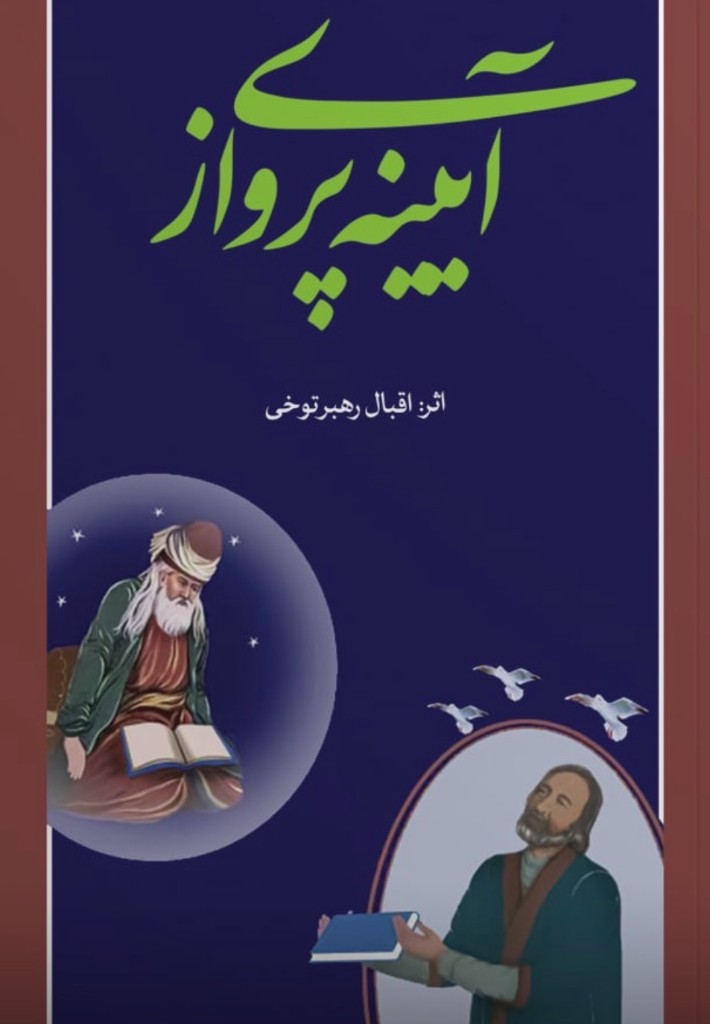
Ayna-e Parwaz
آئینه پرواز
Iqbal Rahbar Tokhi
Dedicated to Mawlana Jalaludin Mohammad Balkhi (Rumi)
Publisher: — · Year: —
Dari
غبار پر هندارو
Ghubar Par Hindaro
غبار پر هندارو
Matiullah Turab (Turab Saib)
Publisher: — · Year: —
Pashto
سپين بغاوت
Speen Baghawat
سپين بغاوت
Matiullah Turab (Turab Saib)
Publisher: — · Year: —
Pashto
اشک آوارگان
Tears of Refugees
اشک آوارگان
Khalilullah Khalili
Publisher: — · Year: —
Dari
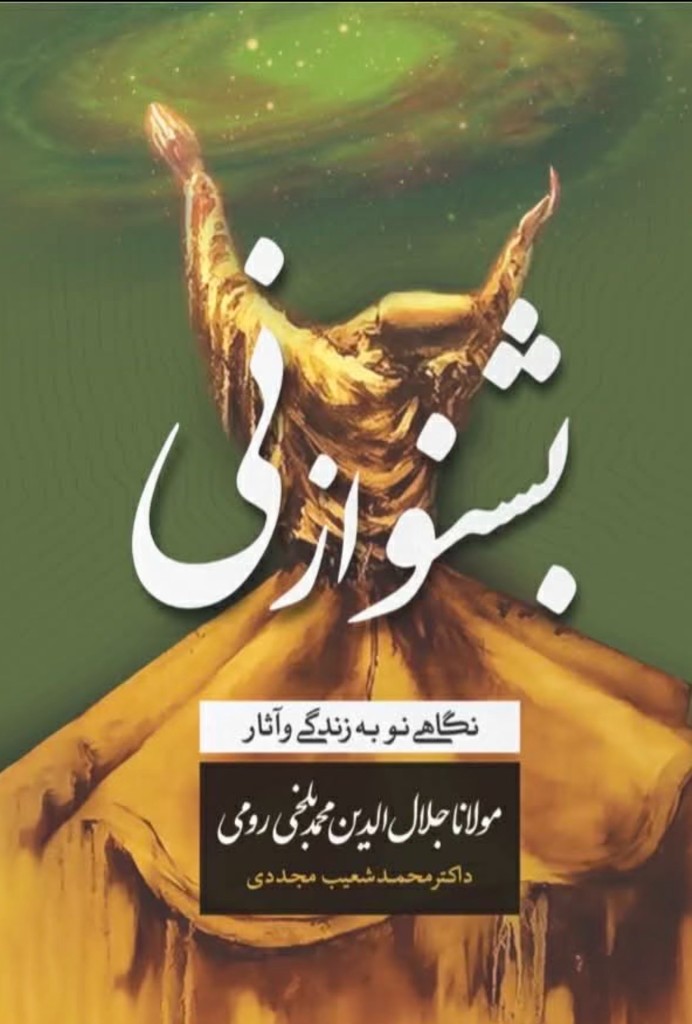
Beshno Az Ney
بشنو از نی
Dr. Mohammad Shoaib Mojadedi
A new look at the life & works of Mawlana Jalaludin Mohammad Balkhi Rumi
Publisher: — · Year: —
Dari
درباره کتاب / About the Book
کتاب « بشنو از نی نگاه نو به زندگی و آثار مولانا جلال الدین محمد بلخی رومی» تنها یک کتاب معلوماتی در باره زندگی، عقاید و آثار مولانا نمیباشد بلکه یک کتاب مبارزاتی و حرکت جدید در مولانا شناسی نیز شمرده میشود.
در سال ۱۳۱۳ هجری شمسی چند شخصیت ملی گرامی فارس/ ایران امروزی برای رضاشاه مشوره دادند که نام این خطه را که اروپائی ها و امریکائی ها و حتی اعراب بنام فارس یاد میکردند بنام ایران مسمی کنند. رضا شاه نیز برای همه کشور ها پیام فرستاد تا ازین تاریخ به بعد (۱۳۱۳ هجری شمسی- ۱۹۳۵ میلادی) این خطه را ایران بگویید و کلمه فارس را استعمال نکنید.
همچنان در سال ۱۳۳۴ هجری شمسی تعدادی از شخصیت های فرهنگی ادبی افغانستان، پادشاه را متیقین ساختند که فارسی که تا آن زمان در افغانستان استعمال میشد و در پشت کتاب های ما قرائت فارسی نوشته بود و همه شعرا، نویسندگان، علما… بنام شعرا، نویسندگان فارسی یاد میشدند بجای کلمه فارسی کلمه دری را در قانون اساسی ثبت نمایند که از آن زمان تا امروز این اختلافات موجود است.
ازین رویداد ها مؤرخین و نویسندگان ایران امروزی بعد از ۱۳۱۳ هجری شمسی سؤ استفاده کردند و همه علما، شعرا و نویسندگان سرزمین ما را بنام ایرانی خطاب میکنند — مولانا ایرانی، ابوریحان البیرونی ایرانی، ابن سینای بلخی ایرانی و مربوط زبان فارسی…
این جریانا برای تاریخ، فرهنگ و ادبیات ما بی اندازه ضرر رساند و ایرانی های امروزی میدان را بردند.
حقیقت اینست که زبان و فرهنگ مردم افغانستان «فارسی دری» میباشد — هردو از ماست، از بلخ، غزنی، هرات، قندهار، کابل وووو
The book "Beshno Az Nai — A New Look at the Life and Works of Mawlana Jalaludin Mohammad Balkhi Rumi" is not merely an informational work about Mawlana's life, beliefs, and writings. It is also considered a work of advocacy and a new movement in Mawlana studies.
In 1313 of the Solar Hijri calendar (1934–35 CE), several prominent national figures of the region then known as Persia/Fars — present-day Iran — advised Reza Shah to rename the territory to "Iran." Reza Shah accordingly sent a message to all countries declaring that from that date forward, the territory should be called Iran and that the word "Persia/Fars" should no longer be used.
Similarly, in 1334 Solar Hijri (1955–56 CE), a number of Afghan cultural and literary figures persuaded the king to replace the word "Farsi" — which had been the language used in Afghanistan, printed on the backs of our books, and by which all poets, writers, and scholars were known as Farsi poets and writers — with the word "Dari" in the constitution. This distinction has persisted to this day.
Iranian historians and writers have exploited these developments since 1313 Solar Hijri, claiming all the scholars, poets, and writers of our land as "Iranian" — calling Mawlana Iranian, Abu Rayhan al-Biruni Iranian, Ibn Sina of Balkh Iranian, and attributing them to the Persian language.
These developments have caused immeasurable harm to our history, culture, and literature, and today's Iranians have won this battlefield.
The truth is that the language and culture of the Afghan people is "Farsi Dari" — both belong to us, from Balkh, Ghazni, Herat, Kandahar, Kabul, and beyond.
Book details such as publisher names, years, and cover images will be added as information is provided. Contact us to add your published work to this list.
بشنو از نی
Featured Publication
Beshno Az Nai
A New Look at the Life & Works of Mawlana Jalaludin Mohammad Balkhi Rumi
Dr. Mohammad Shoaib Mojadedi
This landmark work in Dari goes beyond biography. It is both a scholarly exploration and an act of cultural advocacy — presenting Mawlana Jalaludin Mohammad Balkhi Rumi in his true historical context: as a son of Balkh, Afghanistan, and a towering figure of the Farsi Dari literary tradition. Mojadedi traces the historical record to show how naming disputes of the 20th century led to Afghanistan's great poets and scholars being wrongly attributed to other nations, and reclaims them for their true heritage.
حقیقت اینست که زبان «فارسی دری» هم یکی از زبانها و فرهنگ مردم افغانستان میباشد — هردو از ماست، از بلخ، غزنی، هرات، قندهار، کابل ووو …
"The truth is that the Farsi Dari language is one of the languages and a part of the culture of the Afghan people — both belong to us, from Balkh, Ghazni, Herat, Kandahar, Kabul, and beyond…"
Negaristan-e Farhanghi Afghan has obtained a PDF or digital version of the book and is offering it free of charge as a courtesy of Negaristan Farhanghi, with permission of the Author, Dr. Mohammad Shoaib Mojadedi.
Email Fareed Shirzai Wardak to receive your complimentary digital copy.
Featured Verse
Full poems from the Afghan literary tradition — shared here to celebrate Dari and Pashto letters.
Featured Poem
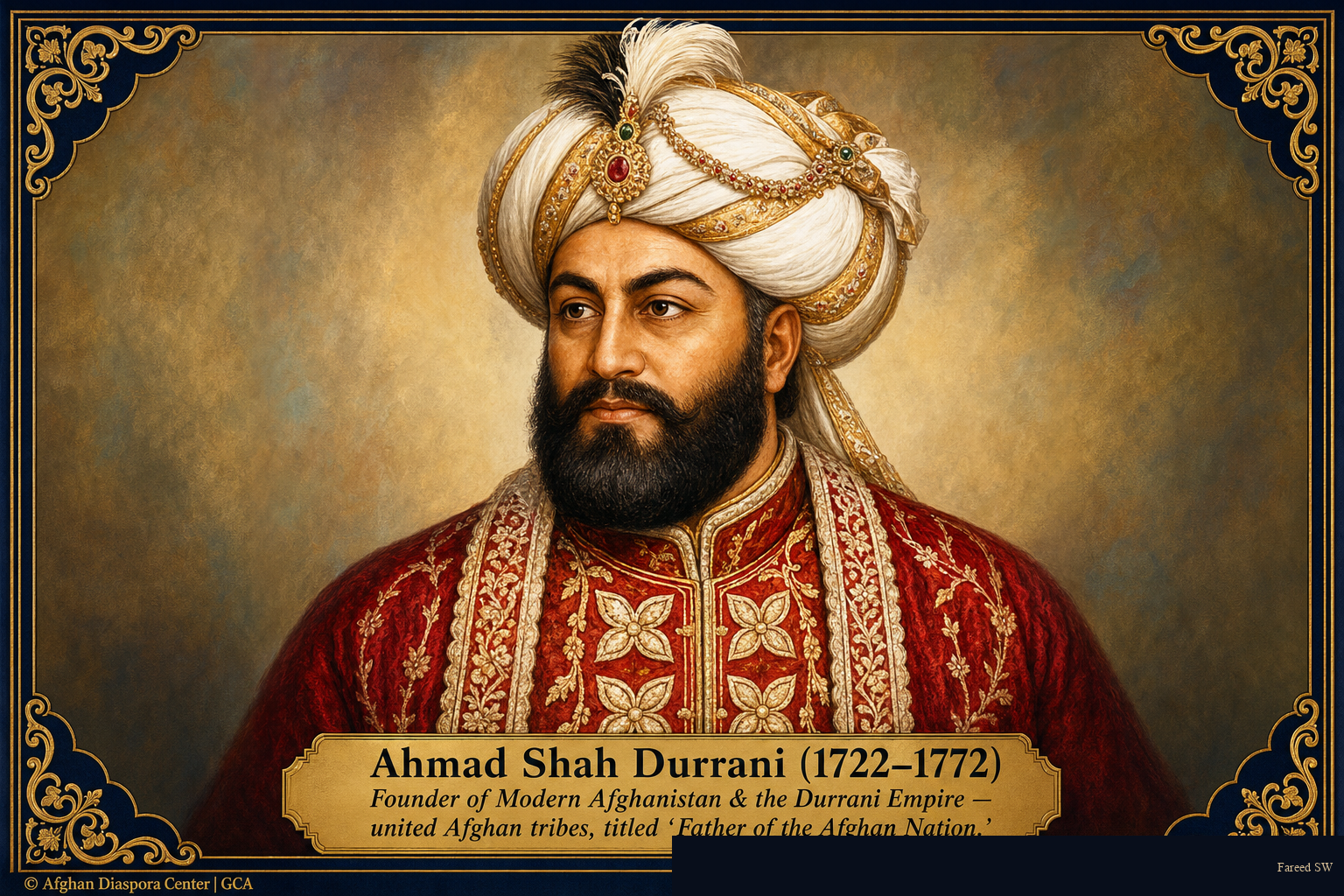
Ahmad Shah Abdali (Durrani)
1722–1772 • Kandahar • Baba-e Qaum • Pashto
شیرین عمر چی تیریږی دریغه دریغه
د اوبو په څیر بهیږی دریغه دریغه
ولی زړه پری خبر نه دی له رفتنه
چی داهسی زر تیریږی دریغه دریغه
ولې هسی شوی بی غمه زما دله
عمر باد غوندی چلیږی دریغه دریغه
که هر څو په ډیر ناز جوړی کړی ماڼۍ
په ارمان ځینې پاتیږی دریغه دریغه
دریغه دریغه اخر دریغه زما دله
چی مین جمله تیریږی دریغه دریغه
دا یاران لکه ګلونه د بهار دی
د خزان په تاو رژیږی دریغه دریغه
د هجران مثال دوزخ بیلتون ډبری
د عاشق په سر لګیږی دریغه دریغه
که پیدا نه وای دیدن بیلتون به مړوو
له دیدنه خون بهیږی دریغه دریغه
اشنایی په مثال ګل حاصل یی خار دی
خارشی سخت هله سوخیږی دریغه دریغه
احمد شاه به څه غم که وخت دهوش دی
د وصال نوبت غږیږی دریغه دریغه
English translation
Sweet life passes—alas, alas; like water it slips away—alas, alas.
Yet the heart knows nothing of departure; thus even gold passes—alas, alas.
Why has my heart grown so sorrowful? Life, like the wind, flies—alas, alas.
Though dawn rises with many coquetries, some remain only in longing—alas, alas.
Alas, alas—alas for my heart; that love itself passes—alas, alas.
These friends are like spring flowers; in autumn’s heat they wither—alas, alas.
Separation is hell’s example—its pillars crush the lover’s head—alas, alas.
Had meeting not existed, we would die of separation; from meeting comes blood—alas, alas.
Familiarity, like the rose, yields thorns; the thorn burns fiercely—alas, alas.
Ahmad Shah, what grief when the hour grows dim—the turn of union fades—alas, alas.
— Ahmad Shah Abdali (Ahmad Shah Baba Durrani)
Featured Poem
Gul Pacha Ulfat
1909–1977 • Laghman • Pashto
له سپیرو خاورو به پورته بیا ګلان شی
معطر به په وږمو بیا دغه جهان شی
په هوا کې به ښکاره نوی مرغان شی
تحول په زمانه کې څرګندیږی
English translation
From bright horizons, flowers will rise again;
Fragrant along the pathways, this world will bloom again.
New birds will appear in the air;
Transformation through time will be revealed.
— Gul Pacha Ulfat
Featured Poem
Iqbal Rahbar Tokhi
«دعای دست شکسته» • Founding leader • Negaristan-e Farhanghi • Dari
نه زبان شکوه گشوده ام، به تو راز دل ز کجا رسید
که سرشک من زمژه گذشت، چو نگاه تو به حیا رسید!
نرسیده کس به مقام من، که رسیده ام به حضور تو
نه گشوده لب ز برون در، که بگوشم از تو صدا رسید
یکی راه دوری حرم گرفت به هوای شوق رسیدنت
ز دعای دست شکسته ای، دل خسته ام بخدارسید!
ز قناعت من و شکر دل، گل راه من شده سنگ و گل
کف خشک دست تهی ما، ز مروتی به حنا رسید
تویی رهبری که ز لطف تو، دل روشنم شده است نصیب
که مقام و شوکت و شاعری، به تلاش منزل ما رسید!
English translation
I have not opened my tongue to speak—how then did the secret of my heart reach you?
That my tear crossed the threshold when your glance arrived with modesty!
No one has attained my station—yet I have reached your presence;
I have not opened my lips at the door—yet your voice reached my ear.
A path of distant sanctuary opened in longing to reach you;
From a prayer of broken hands—deliver my weary heart!
Through my contentment and grateful heart, the flower of my path became stone and clay;
Our empty, dry palms—from courtesy came to henna.
You are the guide—through your grace a bright heart has become my share;
That rank, splendour, and poetry reached our dwelling through striving.
— Iqbal Rahbar Tokhi
Songs by Ahmad Zahir — lyrics by Iqbal Rahbar Tokhi
برایم گریه کن امشبBarayam Geria Kon AmshabSinger: Ahmad Zahir
مرا رها کردی و رفتیMara Raha Kardi Wa RaftiSinger: Ahmad Zahir
نمیدانم برای که بخوانمNamidanam Baraye Kee BekhandamSinger: Ahmad Zahir
شبی از شبهاShab-e Ze Shab-HaSinger: Ahmad Zahir
Featured Poem
Ustad Mohammad Yousuf Kohzad
«زخم ناسور» • 1935–2019 • Kabul • Dari
چه زیبا بود که دلهای همه پاک از ریا میبود
حریم خانه دل، روشن از عشق خدا میبود
دعای خاکساران آبروی اغنیا میشد
اگر یک تکه نان خشک، در دست گدا میبود
اگر از گلشن وحدت گل امید میچیدیم
چرا این ساز یکرنگی، به کشور بیصدا میبود
زمین خانه خودرا، به خون خویش تر کردیم
چه کم میشد اگر در چشم ما، یک نم حیا میبود
تماشاگاه عالم گشته ایم از بی ثباتی ها
چه زیبا بود اگر لطف جهان بی مدعا میبود
اگر بیگانه را با دیده بیگانه میدیدیم
یقین دارم کلید خانه ما دست ما میبود
اگر دزدانه با نیرنگ، افسونم نمیکردی
چرا این خاک بی صاحب زیر پا میبود
اگر یک دل به حال بی پرستان وطن میسوخت
چرا یکزخم ناسوری به قلب آسیا میبود
چه زیبا بود به جای این همه نیرنگ بازی ها
اگر پیمانه دنیا پر از صدق و صفا میبود
اگر محراب تقوا سجدهگاه ما میشد
به جای دست خون آلود ما دست دعا میبود
به آتشخانه افغان دیگر بازی نمیکردی
اگر یک صفحه تاریخ من پیش تو وا میبود
بگو از من به آن ویرانه سازان وطن کهزاد
چه میشد یک دل آباد سوغات شما می بود
English translation
How fine it would be if every heart were pure of hypocrisy;
The sanctuary of the heart aglow with love of God.
The prayer of the humble would shame addiction itself,
If a single dry crust of bread lay in a beggar’s hand.
If from the garden of unity we gathered roses of hope,
Why did this one-note melody fall silent upon the land?
We soaked the soil of our own home in our own blood—
What harm if one drop of shame had moistened our eyes?
We have become a spectacle to the world through our instability;
How fine if the world’s grace had been without pretence.
If we had seen the stranger with a stranger’s eyes,
I am certain the key to our house would be in our own hands.
If you had not bewitched me with theft and trickery,
Why would this masterless earth lie trampled underfoot?
If one heart had burned for the homeland’s wingless souls,
Why would a festering wound pierce the heart of Asia?
How fine if, instead of all this game of deceit,
The cup of the world brimmed with truth and sincerity.
If the altar of piety had become our place of prostration,
Instead of our blood-stained hands, hands of prayer would rise.
You would not toy further with Afghanistan’s burning hearth
If one page of my history lay open before you.
Tell from me to those who lay waste to the homeland, O Kohzad—
What if one flourishing heart were your gift to take away?
— Ustad Mohammad Yousuf Kohzad
Dari / Persian17th–18th CenturySabk-e HindiSufi & Mystic
Mirza Abdul Qadir Bedil — میرزا عبدالقادر بیدل
1644–1720 • Born: Azimabad (Patna), Bihar, India • Died: Delhi, India
Mirza Abdul Qadir Bedil is among the greatest poets who ever wrote in the Dari/Persian language, and the undisputed master of Sabk-e Hindi — the Indian style of Dari/Persian poetry known for its dense philosophical imagery, Sufi mysticism, intricate wordplay, and layered metaphor. Though born in India to a family of Central Asian origin, Bedil belongs most deeply to the hearts of Afghans and Tajiks, who have cherished and studied his verse for three centuries. Annual Bedil symposiums (محفل بیدلخوانی) are held in Afghanistan and Tajikistan to this day.
Bedil's central themes are hayrat (bewilderment before the divine), the mirror as metaphor for self and existence, the transience of life, and the unity of being (wahdat al-wujud). His language is deliberately complex — he believed truth cannot be reached by easy paths. A Sufi by spirit, he was never confined to any single school, leaving behind a body of work spanning six decades of creative life.
Major Works
Irfan(عرفان) — long mystical masnavi; his spiritual masterwork
Muhit-e Azam(محیط اعظم) — a vast philosophical masnavi
Ṭilasmāt-e Hayrat(طلسمات حیرت) — Enchantments of Bewilderment
Ruqaʿāt(رقعات) — letters valued as prose literature
Divan(دیوان) — collected ghazals, qasidas, and rubais; the most widely read of his works
Verse — The Mirror (از دیوان)
آینه چون نقش تو بنمود راست
خود شکن، آیینه شکستن خطاست
When the mirror honestly shows you your true face — break yourself, not the mirror. To shatter the mirror is the error.
Verse — On Legacy (از دیوان)
ما که رفتیم از جهان آثار ما خواهد بماند
نقش ما بر صفحهی دهر باقی خواهد بماند
When we depart from this world, our traces shall remain — our mark upon the page of time shall endure.
Afghan poets and scholars consider Bedil's mastery of Dari the highest pinnacle of the language. Negaristan-e Farhanghi Afghan honours this tradition and welcomes the addition of further verified verses from his Divan to this page.
What We Offer
Literary & Cultural Programs
Negaristan Farhanghi Afghan supports Afghan writers and readers through literary gatherings, published works in Dari and Pashto, and cultural programs that honor Afghanistan's rich poetic and literary heritage.
Dari & Pashto Poetry
Supporting poets and preserving classical and contemporary poetry in both Dari and Pashto — keeping the living voice of Afghan literature strong across generations.
Published Literary Works
Our members include writers who have published many books in Dari and Pashto — sharing stories, poems, and cultural knowledge with Afghan readers worldwide.
Writer & Poet Community
A fellowship of authors, poets, and literary enthusiasts united by a shared commitment to Afghan language, culture, and the written word.
Literary Gatherings
Readings, recitations, and cultural events that bring Afghan literature to life — celebrating the work of established and emerging writers in the community.
Poet Remembrance
Memorial gatherings honoring literary giants such as Sufi Ashqari (Ghulam Nabi Ashqari) and Hamid Mashokhil (Hamid Mohmand) — keeping the memory of Afghanistan's twentieth-century poets alive.
Diaspora Outreach
Connecting Afghan literary culture with diaspora communities through ADC — ensuring that books, poetry, and stories remain a bridge to home.
Join Our Literary Community
Connect with Negaristan Farhanghi Afghan — whether you are a writer, poet, reader, or supporter of Afghan literature in the diaspora.
Whether you are a writer, poet, literary supporter, or interested in partnering with our chapter as we join the Afghan Diaspora Center — we welcome your message.